
Paul Bond and I discuss Episode 10 of Season 1 of The Wire: “The Cost.” And as you may have guessed, this episode is all about, well, the cost of it all. Also, Wire 106 internaut Maggie Stough provides and awesome look at light and color in this episode, and Paul Bond is up to his usual flights of fancy analysis. We’re are all getting pulled into the inescapable narrative gravity of this “Russian novel” of a series.
Episode 11 – as the world goes by
There was some interesting photography in episode 11, and I’m not sure what to make of some of it.
 The opening scene picks up from the end of the last episode, at the scene of the shooting. The segment is shot with a handheld camera, wandering through the crime scene, looking around at the chaos. The way it’s done creates a sense of confusion, of being lost, in the viewing audience. I cut out too many frames when I made it into a gif, which made it too choppy, but still you get the sense of being all over the place without any focus.
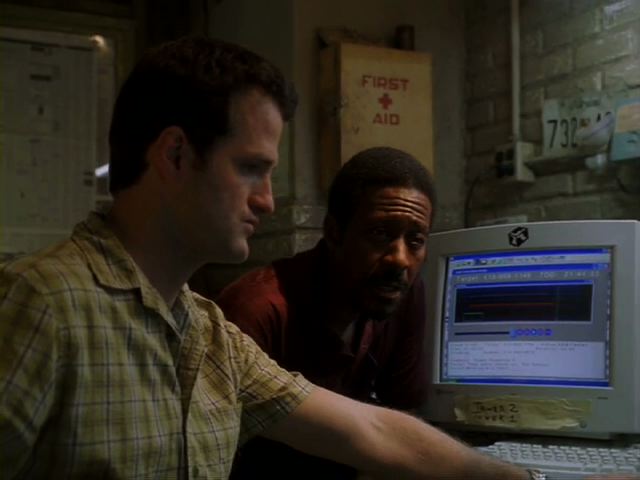
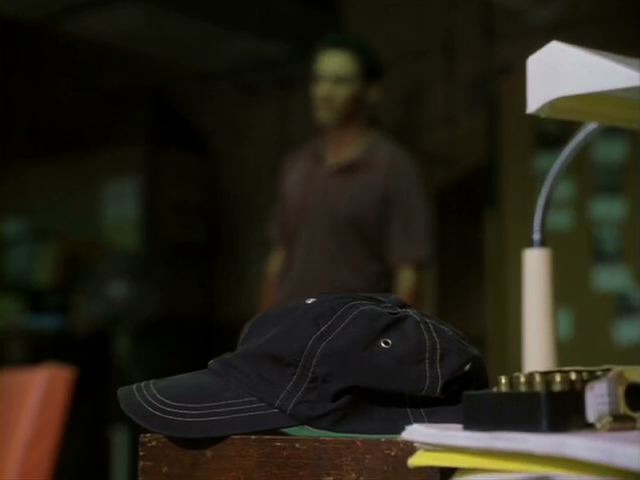
As the story shifts back to the squadroom, what happened on the street is still in the air. As we look at Prez and Freamon, we also see the first aid kit in the background, as a reminder. A more overt reminder is the shot of Kima’s signature hat on the desk, right next to a box of bullets.

There are also a couple things that I don’t know what to make of. We see McNulty with this sort of glowing aura from his shirt. Is that to make us misty-eyed? Is it supposed to imply that he’s innocent of the guilt he’s feeling? Am I just reading too much into it?
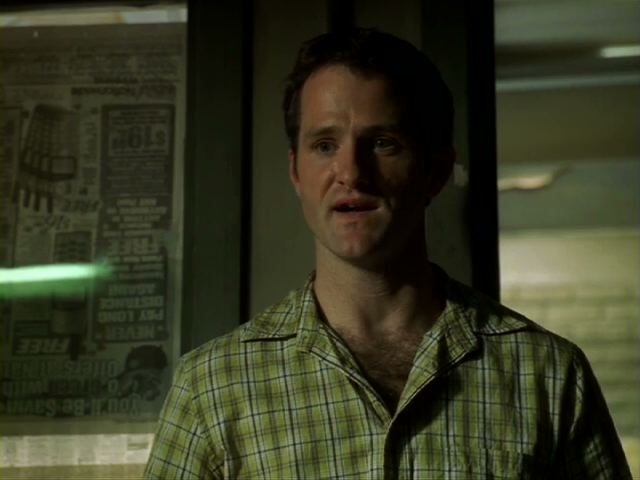
The shot of Prez stood out out me for the green-ness of it. Green in his shirt, green on the walls, the green from the light giving everything a green cast so the image is almost monochrome. Maybe it doesn’t signify anything other than the attention the designers and photographers pay to color and lighting.
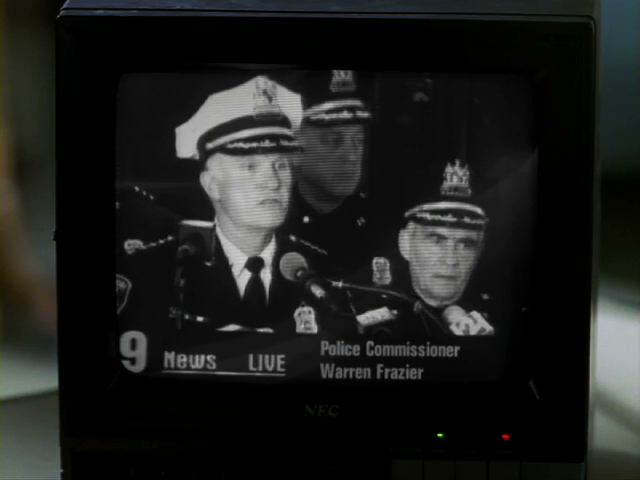 The shot of the commissioner’s press conference on the little black and white TV caught my attention. Coincidentally, it popped up on the WireScenes tumblr this morning too. We’ve been seeing surveillance shots throughout the season, and the way this is presented makes it look like one. The bureaucratic hierarchy deserves as much scrutiny as anything else. But maybe we’d end up like D’Angelo, brooding as the world goes by.
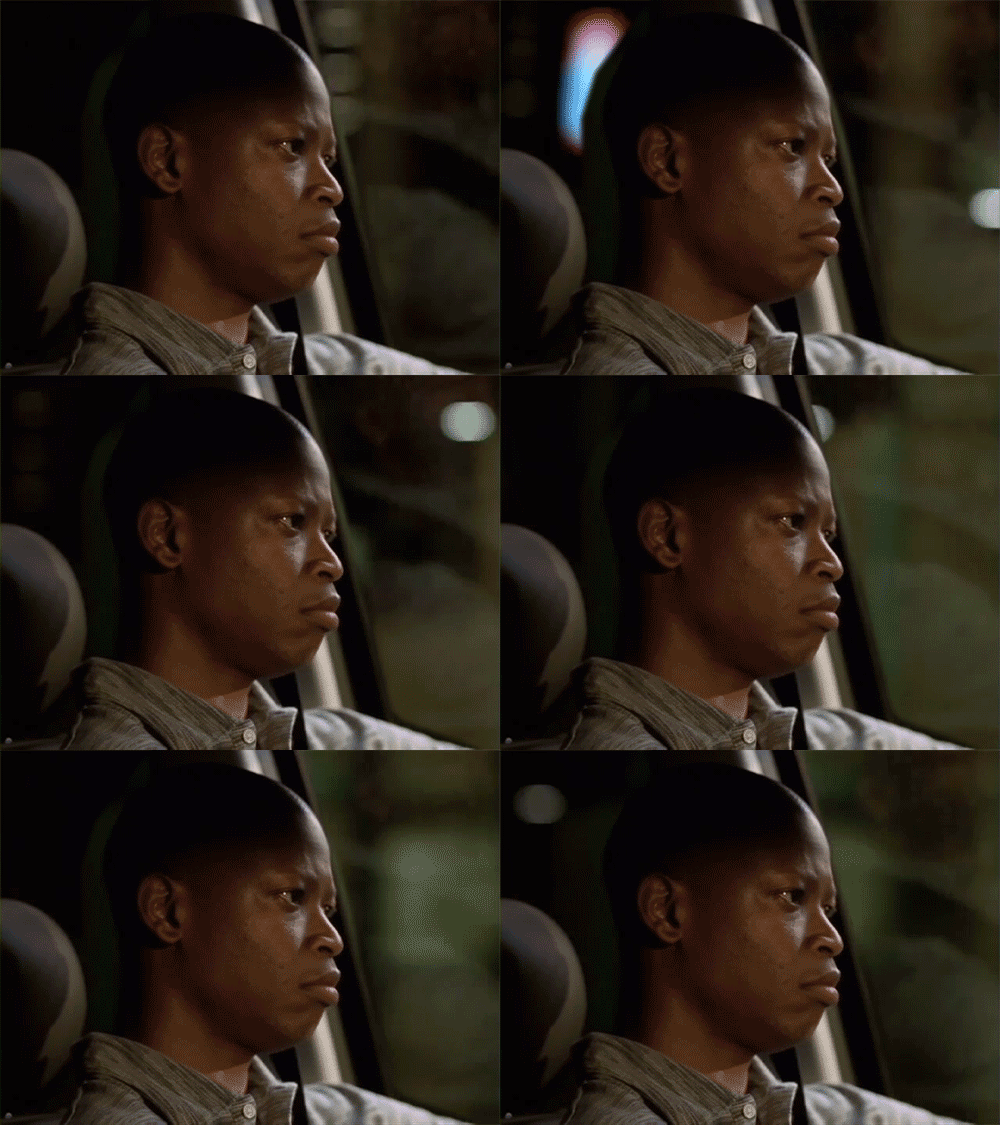
Going to New York City
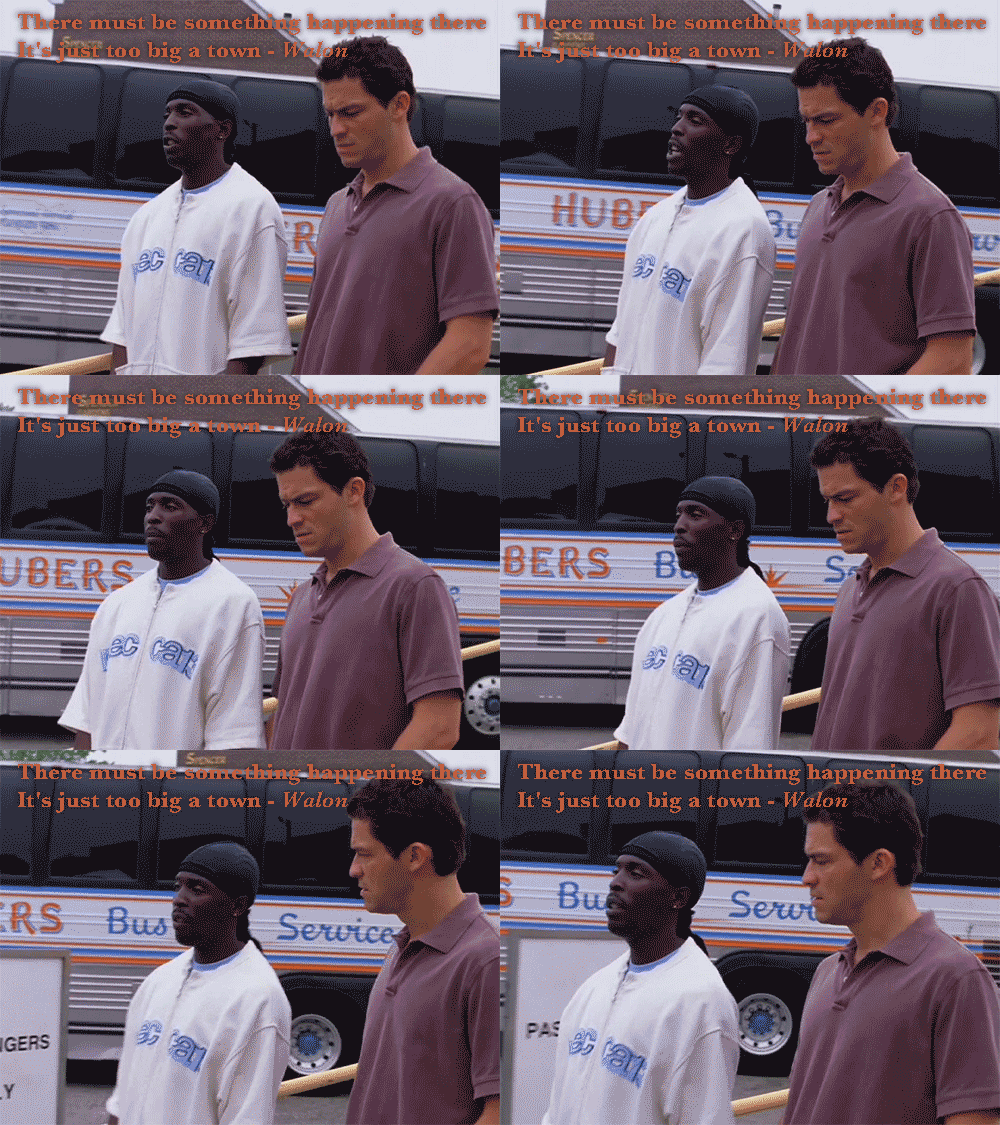
I caught this line near the end of episode 10, as Omar was leaving town:
There must be something happening out there, man.
It’s too big a town, you know what I mean?
It sounded familiar, but I couldn’t place it. Then I saw on a Wire wiki that it comes from a Steve Earle song, and it clicked. It’s from the song NYC (lyrics, YT), which he recorded with The Supersuckers. Since Steve Earle plays Walon from the NA meetings in The Wire, it was just asking to be made into a troll quote. I tried to Gif the part where Omar says the line, but I took out so many frames that it loses any lip-reading effect it might have had. Oh well, they can’t all be winners.
I used MPEG Streamclip and Photoshop to make the Gif. In Photoshop, I went to the top layer and inserted a new layer, where I put the type. I used the orange color from the bus for the type. Then I duplicated the type layer, made that type a dark color, then used the Layer->Rasterize function and the Filter->Blur->Gaussian blur to make that shadow effect.
This bird has flown
Episode 10 starts out with Bubs, apparently clean for the first time in a long time, sitting on a park bench enjoying the day. We hear sounds – the breeze through the trees, children playing, birds chirping – sounds of aspects of life that had probably escaped his attention while he was an addict. Compare that to the sounds when he’s on the street at night – constant sirens, traffic, trafficking (“Death Row! Death Row here!”) and this dull roar underneath everything, like a storm could be coming. He feels his demons calling him, in a walking nightmare.
@phb256 & @jimgroom… Just watched the part in #TheWire where Wallace asks what the crickets were. Powerful stuff. #ds106
— Lauren Brumfield (@Brumface) September 1, 2014
Lauren picked up on the crickets, another sound I wanted to bring up.
The scene says something about the differences in the lives people lead, which I think is what Lauren picked up on, but it’s also fascinating from a telling story with sound standpoint. You hear the crunch of the gravel under the tires, the motor, the parking brake, the doors opening and closing – you know what’s going on just by listening to it. And the crickets. I left a little bit of the following scene in there so you can hear the contrast.
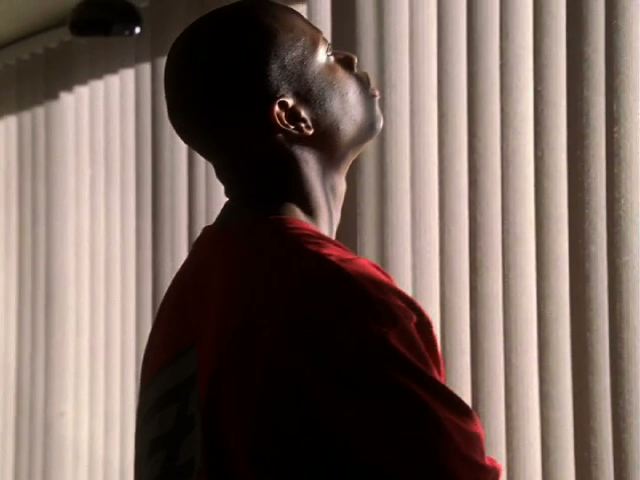

There’s some nice symbolism in the imagery too. In the scene where D’Angelo is listening to Donette’s shopping demands, we see him staring at vertical blinds, like a prisoner behind bars. The shadows they make amplify the effect. This is something that’s common in film noir – shadows suggesting bars to show that a character feels trapped. And that’s what D is feeling. I like that sonic transition to the next scene. Donnete’s yelling answered by the voice on the wiretap, “Why you holler at me? I’ll get to you when I get to you.” We hear what D wants to say, although it comes from someone else in a different context.
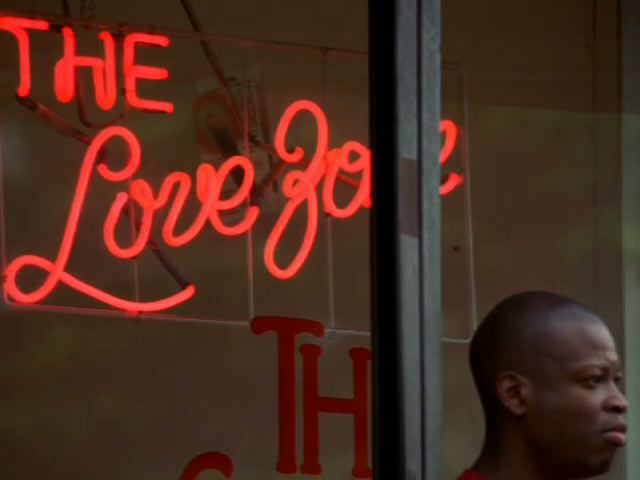
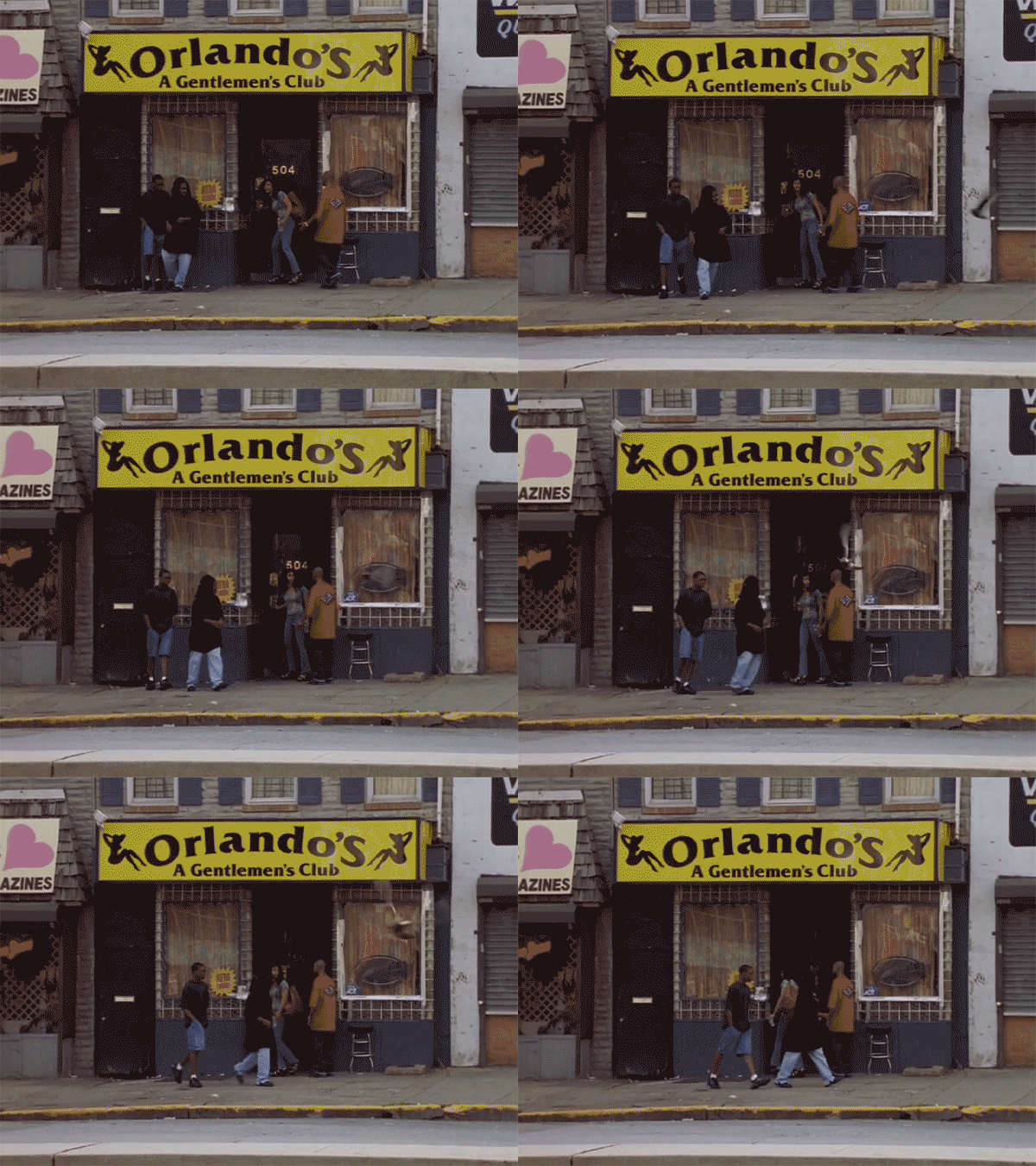
Later we see D waiting to catch Shardeen outside Orlando’s, standing under neon letters hyping The Love Zone. But she’s done with him, and as she turns her back and goes in the club, a bird flies in and out of the shot. Like the song says, this bird has flown.
Wire 106: Week 2 “Building the Community”
Below is a breakdown of what will be expected for week 2, but be sure to watch the video in its entirety for context, details, and personality 
Continue reading
Some quick thoughts on Week 1
Nicholas did an audio summary which wasn’t something I expected, but why not do it that way? Going forward, it will probably take more than just audio, because we will also want to embed and connect the things we make as we go along.
Amy jumped into some of the Daily Creates, which was very cool. We will all be doing more of those in the weeks ahead. She recognizes that the show is not to everyone’s taste, but still finds compelling things about it. That touches on a key question: What makes for good storytelling? What makes it work? What makes it effective?
Danielle, among others, talked about the struggles with using the various social media tools. It can be intimidating, if you’re not used to working with such tools, and it can be challenging to figure out how to use them effectively. But it’s also kinda easy, once you dig into it and start using them. Maybe using them effectively isn’t so easy, but using them is.
Overall I think we’re off to a great start. A lot of people had great analyses of the episodes, and great insights. I encourage everyone to look a little closer, and think about how the story is being told, the various techniques being used, the little details and the effect they have. Jim and I come at it from a little different perspective, having seen the entire series already and having thought about it for a while, but each of your perspectives is just as valid
Wire 106: S01E09 “Game Day”
This is our discussion about the 9th episode of Season 1 of The Wire: “Game Day.” And that’s nine episodes of The Wire by the first week of class—that’s pretty awesome. And if you have kept up with them so far, then you are too! Next week we’ll be dialing back the pace considerably, only doing 3 episodes a week. That should bring us into Season 2 by week 3. It’s our plan to get through 4 seasons of The Wire this semester, and then have fun with Season 5 over winter break for any and all who might be interested 
Also, be sure to check out Paul Bond’s notes on episode 9. Paul has done a tremendous amount of work with the sound editing of the more recent episodes, and we’ll be having a special radio discussion dedicated to sound some time this week, we’ll be sure to announce it for anyone interested in participating. What’s more, looks like we will be bringing in the sound editor for the series, Jen Ralston, to talk about her work on the show. This should prove amazing! We’re still working on a time and day, so I’ll keep everyone posted.
Wire 106: S01E08 “Lessons”
This is our discussion about the 8th episode of Season 1 of The Wire: “Lessons.” As I mentioned in the last discussion post, in the coming weeks we will be live streaming these discussions for anyone to join from the wire106 course and beyond. And given the reflective work I am starting to see from the UMW students I can’t wait!
Once again, I’ll keep the post for this one brief because given I have a longer post I will be writing that integrates all three episodes, but in many ways focuses on this one—which is all about lessons. It starts with Jimmy McNulty giving his kids a lesson in police work in A Baltimore market as they tail Stringer Bell. A scene, as Maggie Stough notes acutely in her post on the episodes, that parallels the lesson Wallace gives to one of the many kids he is raising in the abandoned rowhouse:
This scene with McNulty and his kids seems to parallel the scene between Wallace and one of his kids. The kids struggles with a math problem and figuring out how to do it in his head, but the minute Wallace phrases it as a drug dealing problem instead of passengers on a bus, the kid can solve it in his head. When Wallace asks why that is, the kid explains that the consequences for getting the drug dealing math wrong are much more serious than getting a math problem wrong. Just as McNulty’s kids enjoy playing the spy game, Wallace’s kid has an understanding of drug dealing and takes the matter seriously.
The parallel between these two lessons is an excellent read, and it suggests how much we are defined by our context. We can also see the theme of lessons repeat throughout the episodes in relationship to education. Stringer Bell attends a local community college to learn about macro-economics, while Herc and Carver are preparing for the sergeant’s exam. The following two screenshots mark the transition from Stringer Bell in class to Carver and Herc taking their exam, reinforcing the parallels between these two worlds.


I was also struck by the constant, subtle reinforcement of how similar the cops and robbers are in this series. For seven episodes now we have been trained to see the Barksdale crew with a pager by a pay phone reporting to their bosses. In this episode I was struck to see Jimmy McNulty doing the very same thing, it’s like he went to work in the pit:


Paul Bond offers more visual and aural readings of this episode, so don’t miss that either. Also, as Brittany notes in her week 1 summary blog post, this is the episode wherein Omar and the Barksdale are in full-on Sergio Leone mode.
Omar says, “You come at the king, you best not miss.” Interesting because Avon was the king but now Omar is saying he is the king. He said this after he injured one and killed one of Avon’s men.
Interestingly enough, this epigraph foreshadows how episode nine is going to end for Omar. Man, this show is good!
Wire106: S01E07 “One Arrest”
This is our discussion about the 7th episode of Season 1 of The Wire: “One Arrest.” In the coming weeks we will be live streaming these discussions for anyone to join from the wire106 course and beyond. Also, we will be asking various UMW students to sign-up to lead the discussions of certain episodes, and we will schedule around their availability. So stay tuned for that announcement in week two.
I’ll keep the post for this one brief because I have a longer post I will be writing that integrates all three of the episodes we discussed this week. But be sure to check out Paul Bond’s discussion of parallels in this episode (not his awesome use of GIFs ).
Also, I really enjoyed Kristine’s reflections on the discussions in her weekly summary post wherein she remarks….
….there are things I’m seeing in my second trip through Season 1 that I missed in the first viewing. Stuff in the background of scenes, things on computer screens that I missed the first time around, and bits of dialogue that have more meaning to me now, having seen the entire thing all the way through. I like the explanations that Freamon gives, and how after he at first seems skeptical of the group and remains on the fringes, he jumps in when it becomes a puzzle that needs to be solved. I like how Prez “finds himself” as a puzzle-solver too, and the two of them end up being the brain trust of the law enforcement side of the story.
 She sums episode 7 up better than I can. This entire series will be all about the close reading, and watching each of the episodes more than once to fully get a sense of what’s going on—Lester Freamon gives us just that in the beginning of this one.
Notes on Episode 9
In this episode, Freamon repeats “what everyone knows and no one says” as Daniels put it
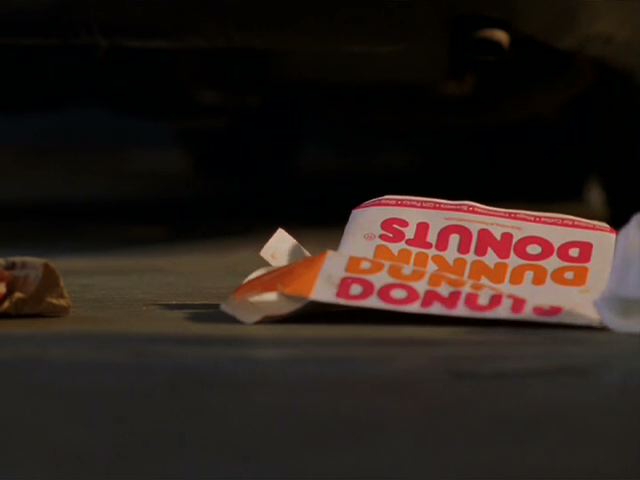
Herc and Carver followed the money out of the towers and confiscated it from Wee Bey’s vehicle. One of them made a joke about “dollars to donuts” in the squad room, which we’re reminded of when the Dunkin Donuts box comes out of the trunk at the end.

They were searching the trunk because they were suspected of pocketing some of the confiscated money. In this shot they’re being called into Daniels’ office, where they will be called out on it. The way the light reflects off of the chair emphasizes the idea that it’s the hot seat.
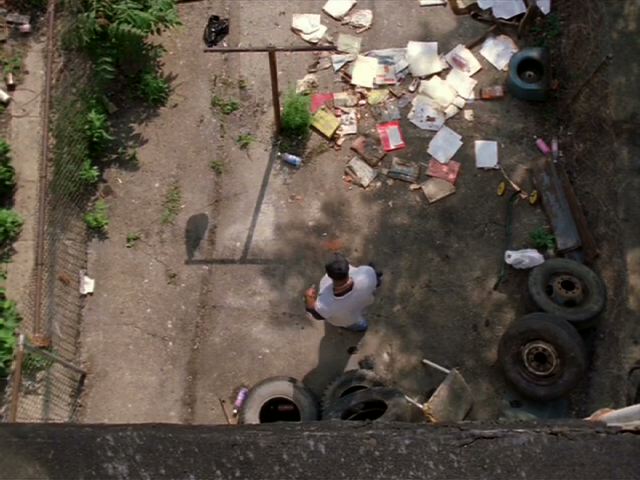
Here is a perspective shot, looking down from a roof to where a stash of drugs is kept. Does Bubs “see the bottom coming up at him,” as Waylon says? The shot plays a metaphorical role as well as a purely narative one, at the same time as it creates visual interest with the unusual angle.
It was kind of comical to see Bubs do his fishing trick, but things turned bad quick. While he gets away, he also gets to listen to an innocent bystander take the beating meant for him. Notice how the background noises affect the mood – not just the cussing and the blows from the bat, but also the siren and alarm, which really add a level of tension to it.
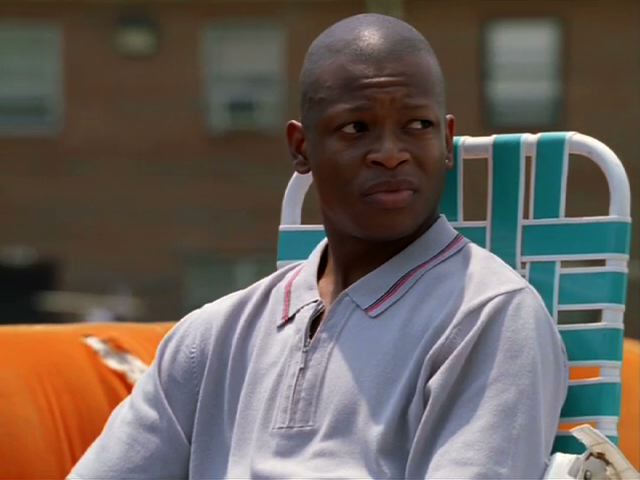 This shot of D’Angelo caught my eye. He’s not sitting on the couch anymore, but on a folding chair. Is this symbolic? The reason it caught my attention is the color contrast. The blue of the chair is basically the opposite of the orange of the couch. It’s subtle, but it seems to say D is not part of this; he doesn’t belong here.
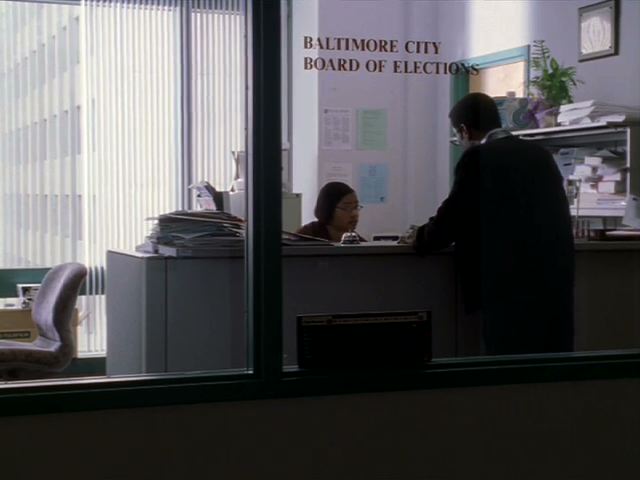
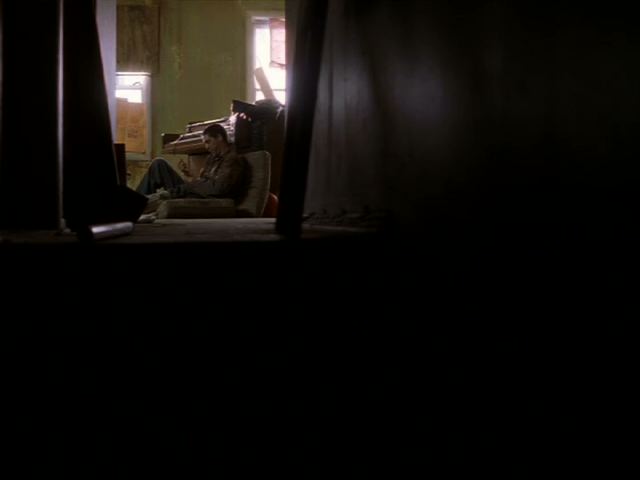
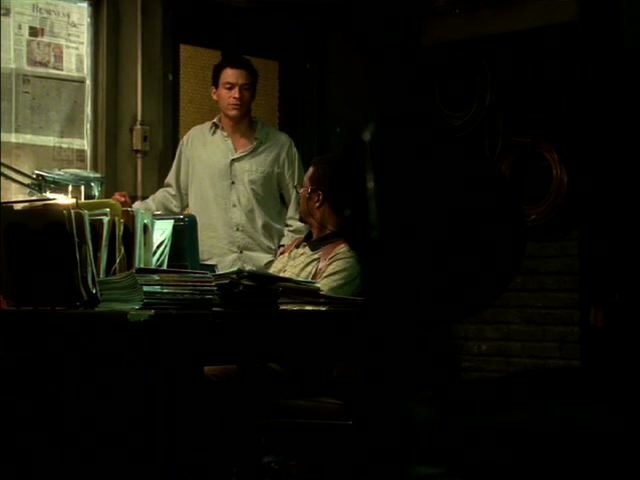 I mentioned the frame within a frame idea last time, and found some more examples here: Freamon at the Elections office, framed by the window, which conveniently tells us where he is. Johnny in whatever that place is, framed by the doorway, darkness crowding in. McNulty and Freamon, similarly framed by darkness, but there’s a difference here. The light comes in from the corner, which opens up the composition, as if they have a way out where Johnny was trapped.
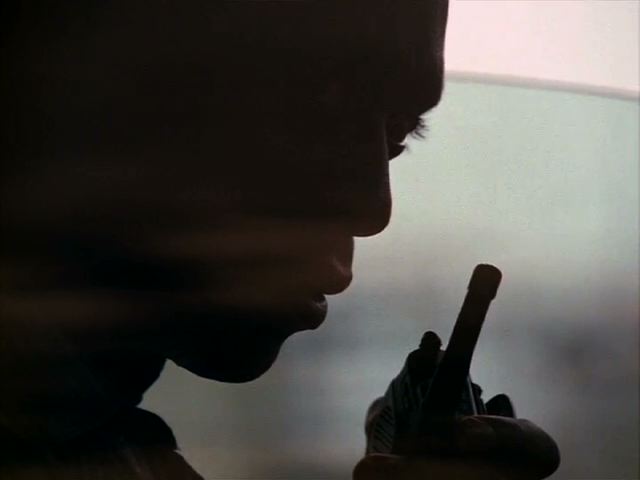
This last one I just like for the silhouette effect. We see little more than the outline, but it’s enough to tell us what it is. The whole series strives for a high level of realism, but at the same time maintains a strong artistic aesthetic.
