Notes on episode 8

01epigraphThis episode features Omar’s haunting whistle again. I like the effect better this time – the slight echo, the dark, empty street – and the episode’s epigraph is delivered at the end

Daniels explains to his wife the problem inherent in following the money. “What everybody knows but nobody says” Freamon repeats this at another point in the series.

We saw String sitting in his Economics class. Here he shares the lesson of product elasticity with the workers in his print shop. It’s kind of a comical moment, but there’s a message there too – String wants to leave the street behind. We’ll see more about this in later seasons.

The sartorial splendor of Bunk
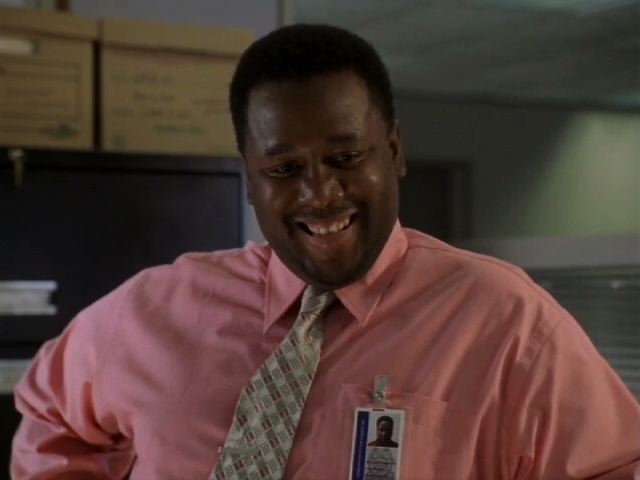
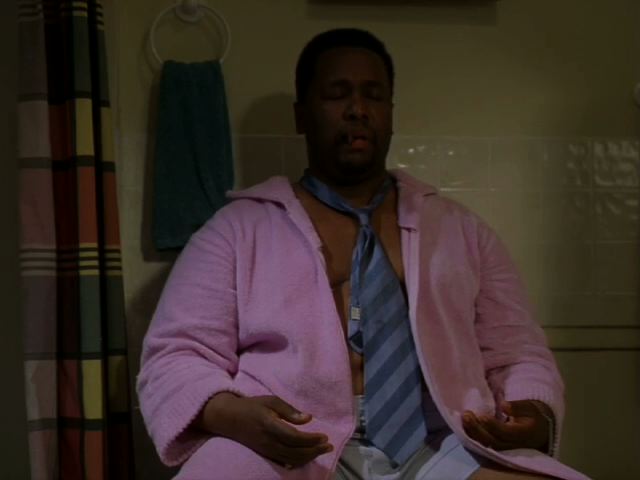
02bunk 14bunk

I like the way the color of the shirt Bunk wears at the beginning of the episode is matched by the color of the robe he’s wearing at the end.
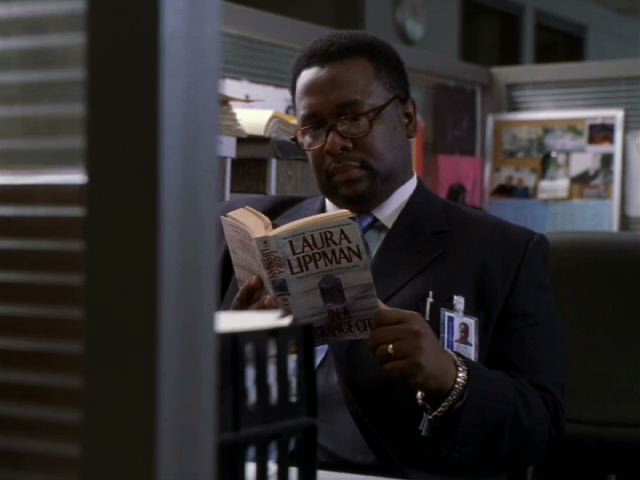
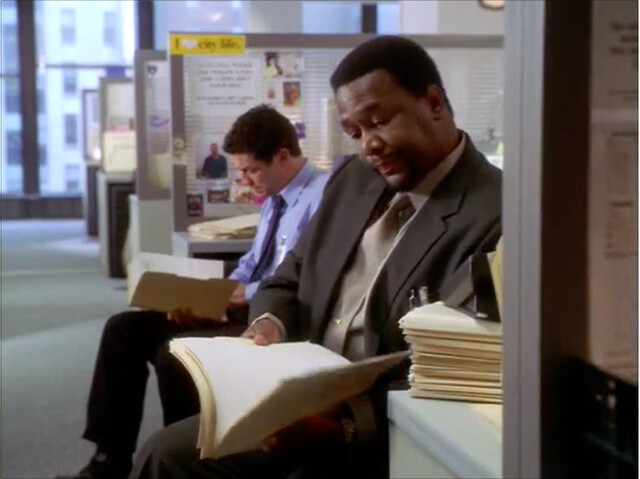
12Laura LippmanHere is a transition shot of Bunk reading a novel by Laura Lippman just before the dialogue starts. I thought there might be some significance to it, so I looked it up. She’s a Baltimore author of detective fiction and former writer for the Baltimore Sun newspaper. Her novels are set in the city, just like the series. She’s also married to former Sun reporter David Simon. That name sounds familiar.

Frame within a frame
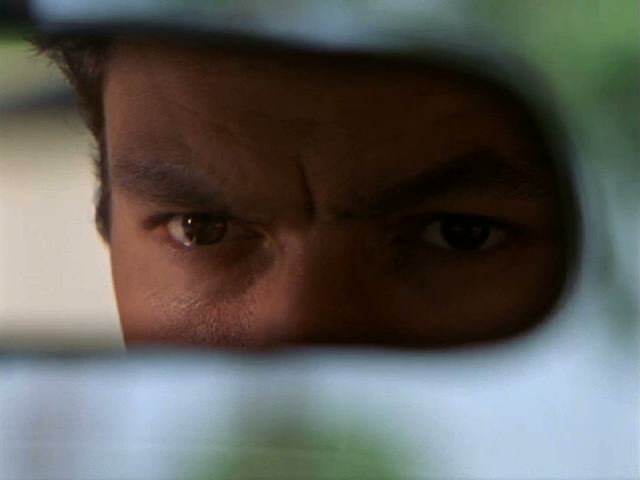
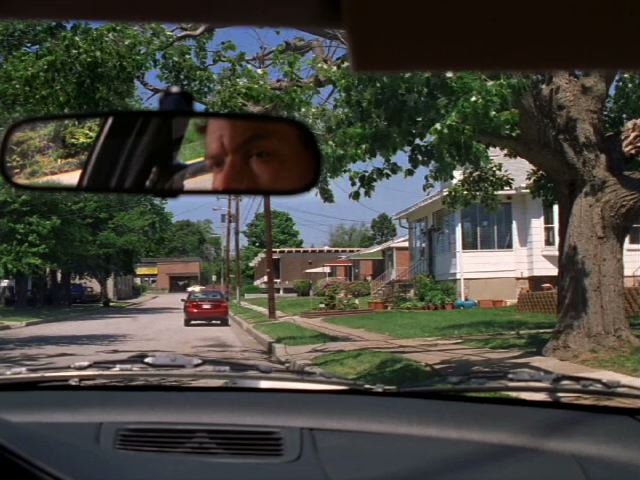
05reflection frame in a frame 07reflection frame in a frame

10stringWe see many of these “frame within a frame” compositions throughout the series. Here are two of McNulty on surveillance detail – we see him in the mirror, then again framed in the mirror as we look out on the street framed by the car window. Another example is the shot of Stringer framed by the window on the classroom door.
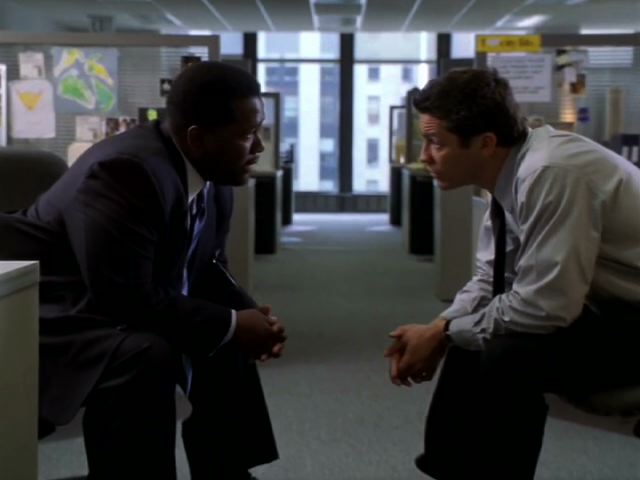
 

13composition


Here is another example of a symmetrical composition. The two sides mirror each other in a general sense, both in the office layout and the character poses, but details make the difference that keeps the composition from being overpowering.


04linesThis shot is an example of line and visual texture. The wire in the fencing makes a linear texture that projects onto Sydnor. Line and texture are design elements, like color and composition, worth paying attention to.

Wire 106: Week 1 –”The Setup”

Week 1 Introduction/Setup 8/25
all work is due midnight August 31, 2014
The first week is dedicated to getting setup for ds106; install your WordPress site and create other social media accounts such as Twitter, Flickr, SoundCloud, YouTube, etc. Complete Introductions via posts, twitter, Flickr, video, audio, etc. Watch The Wire through episode 9, and watch the commentaries on each episode.
Open course resource: http://ds106.us/open-course/unit-1-bootcamp/

Continue reading →

Parallels in episode 7

01code 02epigraph

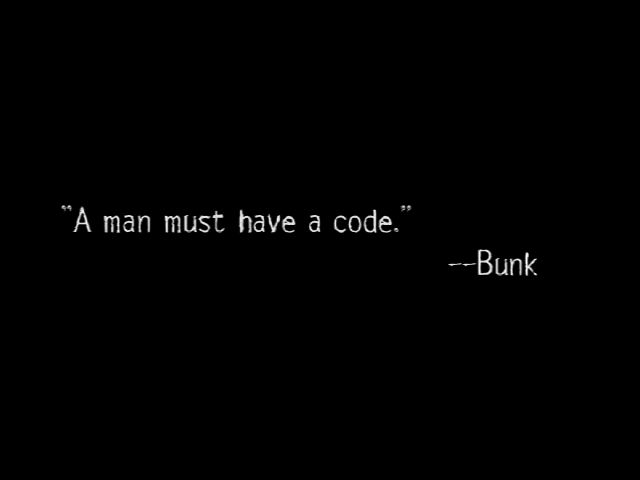
Episode 7 starts out with another parallel. The opening scene discusses the coded message from the wiretap, then the epigraph at the end of the credit sequence reads, “A man must have a code.” Bunk says the line in an entirely different context, but it shows something about how the pieces relate. It could be read as a pun, but that doesn’t seem in character with what the show is doing.

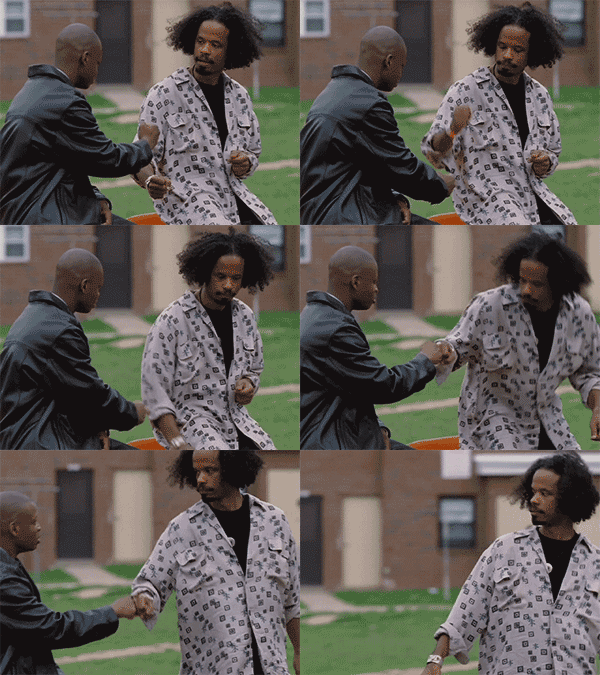
handshake1sm handshake2sm

shake-snapThat fist bump/handshake that Herc and Carver do is repeated later by D’Angelo and Orlando. Does this signify something? It may just be a regional mannerism that the characters share. But that shake/snap thing that Daniels and Day-Day do is interesting. I haven’t noticed it elsewhere in the series. It appears to take some coordination between the two parties, so it shows a shared understanding. Maybe it’s saying that neither of the two really belong in the crowd at the party, and they both recognize it.

08backwardsglance 11bird

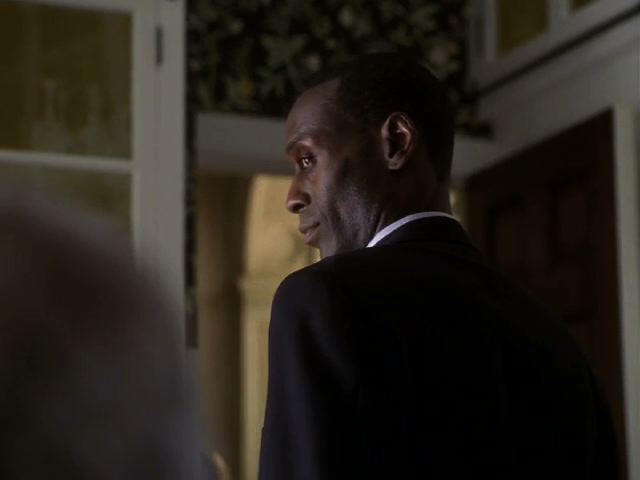
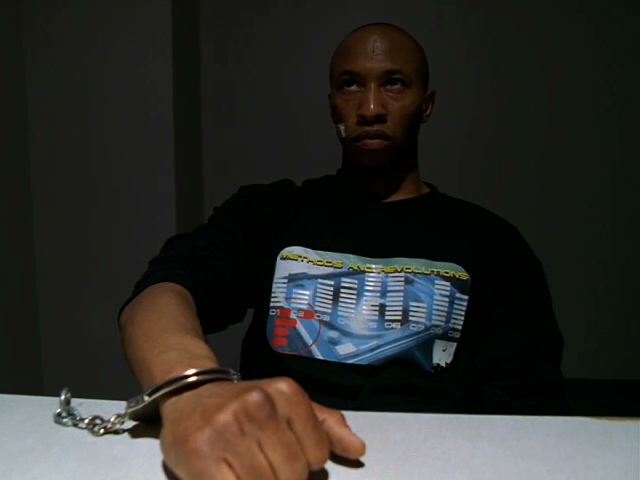
Daniels leaves that encounter with a backwards glance side-eye look that’s kind of striking. A lot of the acting in the series is in the eyes and expressions. In the shot of Bird as he’s handcuffed to the table you can see him boiling over with hostility. Even though he’s half in the shadows, we can see he’s ready to explode, fist first.

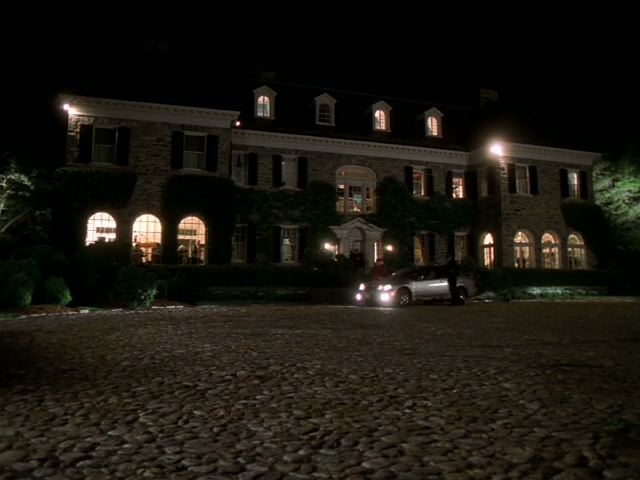
06barexterior 07partyexterior

09barinteriorThere’s another parallel between Daniels and the fundraising party and Bunk and McNulty at the dive bar. The scenes appear to be going on simultaneously, and they show a tremendous contrast between their respective social circles. The party is in a large mansion, probably with valet parking and lots of acreage. The bar is wedged between other establishments on a street full of cars at parking meters. Inside, the party is brightly lit, crowded and upscale. Inside the bar is a dark, dank den of iniquity, the red light on the wall giving it a hellish appearance.

Here’s a bit of the sound from the party, in which Deputy Burrell points out another parallel:

Just after he links politicians to criminals, we hear a distinctive laugh. That’s a voice which will play a larger role in seasons to come.

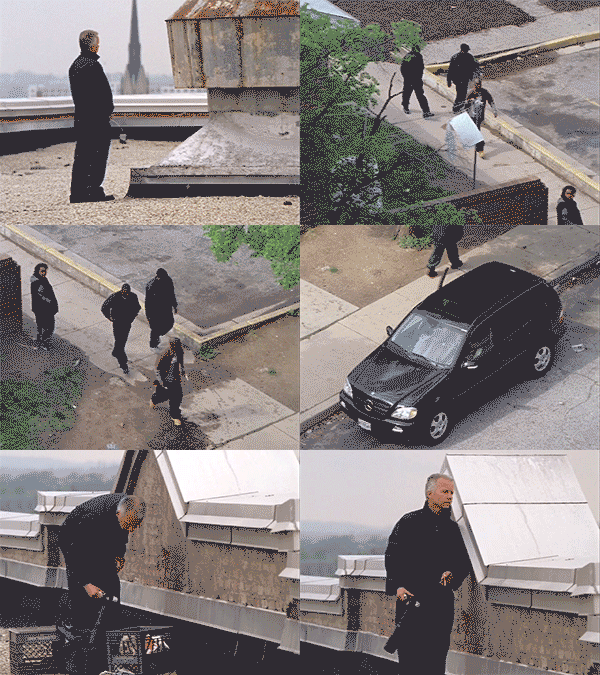
I liked the sounds in the scene where Bird got busted. It’s mostly a wide-angle scene, shot from a distance, so we hear all the sounds of the city, the voices bubbling up through the ambient noise. The sound paints as much of a picture as the camera, perhaps even more so.

This next track is of the police expressing their displeasure with Bird in the interrogation room. All we see is the door. What happens behind it is told through sound and visualized through our imaginations. The show is playing us in a way, making us part of the story by forcing us to fill in the blanks. That’s a powerful technique.

Wire 106: S01E06 “The Wire”


With this discussion of the eponymous episode of season 1, Paul and I wrap-up the pre-season for the Wire 106 class—a themed version of ds106 being taught at UMW, but up for anyone to play along. The class officially gets underway this coming Monday, the 25th. We’ll be continuing the discussion of episodes 7, 8, and 9this coming week as folks settle into their online digs. We started discussing the episodes a couple of weeks early because we wanted to get a head start on our process. I think we’ve started to get into a rhythm. Paul shares his close readings of the visual, audio, and filmic elements through his awesome blog posts about the episodes. And I try and dig in on some thematic and cultural references around those same episodes. The post from each of us feeds into a discussion of that episode during the week.*

Continue reading →

Wire 106: S01E05 “The Pager”

In our discussion of episode 5, “The Pager,” Paul Bond once again provides a great post that demonstrates how the themes of surveillance and paranoia are reinforced in the set design, shot composition, lighting, and audio elements. He also explores the filmic foreshadowing that you may have missed the first time through. Paul’s posts provide a really useful model for close reading these episodes, and an excellent incentive for slowing down each episode and looking and listening closely beyond the dialogue. It’s a good exercise to push yourself to think about what is happening in a particular scene, or even shot, beyond the script. The anatomy of scene, so to speak.

Continue reading →

Wire 106: S01E04 “Old Cases”

In this discussion of episode 4, “Old Cases,” Paul Bond provides a clinic on examining this episode’s use of color, visual rhyming, the noir aesthetic, and more. His post here provides some excellent notes for this discussion, or even a great resource on its own. This discussion provides close analysis of the visual themes at work in The Wire that you might miss on the first run.

Continue reading →

Subliminal messages

01brandon 10brandon

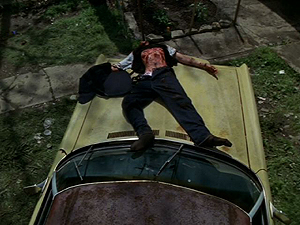
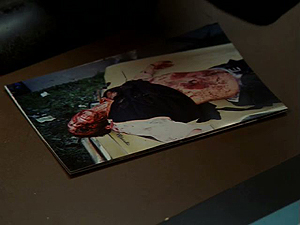
Episode 6 opens with Brandon’s tortured corpse sprawled across the hood of a car, for everyone in the projects to see. His death is the central point to the episode. It closes with a repeat of the image, in the form of a photograph on Lt. Daniels’ desk. There’s a kind of symmetry in that.

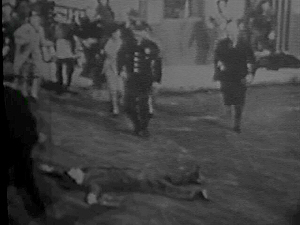
03televisionThere’s an interesting scene early on of D’Angelo at home, getting ready for the day. The camera sweeps by a television showing an old black and white film, with police running up to a dead body in the street. The way the body is laying there matches the way Brandon was positioned. It suggests to me that D’Angelo has removed himself from the reality of the killing – life goes on, it’s in the past.

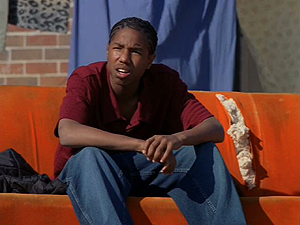
04insides hanging outIn contrast, Wallace is haunted, tormented by what he saw of what was done to Brandon. Here he is, sitting on the couch telling D about how he saw the body, “cut open with his insides hanging out.” And there’s some visual poetry in the couch, with that large vertical gash in the upholstery, with the stuffing coming out. Wallace isn’t removed from it at all – he’s sitting right on top of it.

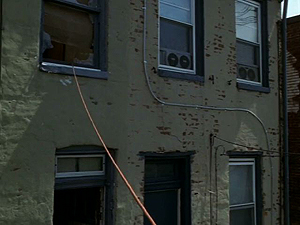
02wireThe beginning of the episode shows another stark contrast between D’Angelo and Wallace. Wallace lives in a vacant building, getting electricity from a string of extension cords running through a broken window to an adjacent building. He shares a set of rooms with other children and acts as their guardian. They all sleep in their clothes. The next scene is D’Angelo’s home, where we see him spend time going through his large wardrobe of brand-new clothes, cutting off tags and trying on different outfits. The economics of The Game do not favor the pawns.

08chess


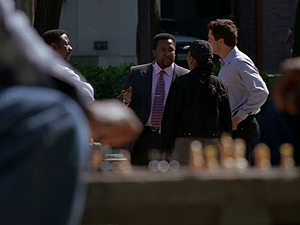
Chess shows up again, in the foreground of this shot. Members of the squad are discussing strategy in the background, wondering if they can play Daniels against Rawls to keep the game going. There’s a subliminal quality to all these messages.


Hey man, nice shot

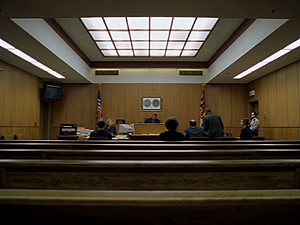
05courtroom


I love this courtroom shot – the use of line, perspective and symmetry. There’s an emptiness to it too, which may say something about the juvenile justice system.


06reflection


Another one is this shot from the conversation between Daniels and Augie. We see Augie’s reflection in the glass behind Daniels. His reflection lingers and comes more into focus after the conversation is over, as he thinks about whether or not he wants to stay with the squad.


Just missed it

missed-itSimon violates his rule about unsourced music in this episode, during the scene where Avon, String and Stink slow-walk through the courtyard making the payoffs. It’s a potentially pivotal moment because Barksdale is seen doing business out in the open, but the guy who should be watching had to see a man about a horse instead. Here’s the tail end of the scene.

What’s up? What you need?

I like the scene where D confronts Cass over skimming from the stash. The street sounds are great, but the sound of the eggs breaking doesn’t work quite so well without the visual. But what I really like is Cass’ response when she sees D: “What’s up? What you need?” It’s the exact same thing that String said when D paged him in the last episode. I know this because it’s part of the repeating sound loop on the DVD menu.

“The Pager” -Technology, Surveillance, and Paranoia

“Boops Beeper” by Jared Aubel Art was a visual that struck me for episode 5 of The Wire‘s first season: “The Pager.” The dated technology in The Wire is part of its appeal to me. As John Hendel argues in this piece in The Atlantic that the details like dated technology and the post-9/11 surveillance state marks it as a document of cultural specificty:

These details are dated in the best sense of the word. Few ever understand their present until it becomes past, but The Wire’s brilliance was its understanding and articulation of contemporary life. The drama was an authentic mirror. What worked about The Wire was its very grounding in these years and in the geography of Baltimore.

The pager as throwback technology becomes the technology the street uses to avoid surveillance. Lester Freamon calls it “a discipline” on the part of Barksdale’s crew in episode 4. The discipline he is referring to is the work it takes to eschew being surveyed. As Paul Bond notes in his reflections of episode 5, this attention to detail and avoidance of phones and photography is why Avon Barksdale has been successful. At the same time the opening scene of episode five suggests a constant paranoia in Avon reminiscent of Harry Caul in Francis Ford Coppola‘s The Conversation. It’s interesting that the show exists in a moment right after 9/11 but before the explosion of social media—it would almost be hard to believe Barksdale’s ability to remain off the grid just a year or two later.

The opening scene of episode 5 brilliantly sets up all the themes of technology, surveillance, and paranoia in the opening scene of episode 5. It’s one of my favorites—and highlights a character that often doesn’t get enough love: Avon Barksdale.

I think the gorgeous patent pending schematic visual assignment Tom Woodward created last Spring would be an awesome take on this episode—in particular the technology of the pager. I was looking at the patent pending assignment examples done, and these two examples by Shane Freeman are awesome.

ds106 reactor

Tesla Patent DS106

Woodward has a way with the assignments ;)

Institutional Noir

A shot Paul Bond captured from episode 4 of The Wire, “Old Cases,” highlights the corporate institutional spaces much of the police work revolves around in this season. In his commentary for episode 1 of the season, David Simon refers to the office furniture as more akin to an insurance office than an old school police department. Unlike the reassuring heavy wood furniture reminiscent of Barney Miller, the furniture in police headquarters is alienating and impersonal (although the detail’s basement office begins to take on the feel of another era, when they actually did police work?). The set design reinforces a broader shift in the culture. Thinking about Simon’s comment about insurance agencies reminded me of Billy Wilder’s classic noir Double Indemnity (1944).


The murder in Double Indemnity was investigated by an insurance agency, rather than a police department. It’s as if the vision Wilder had in the 1940s had become a reality fifty years later. Police departments being run by numbers and margins much like insurance agencies, and Keyes discussion of statistics in the following scene of Double Indemnity might be a sign of things to come for police work with CompStat:

The alienation at the heart of one of Double Indemnity is everywhere apparent in the design of the modern institutional spaces, not unlike The Wire. James Naremore’s book More than Night isolates the offices and locations of this film to discuss the “industrialized dehumanization” at work in the culture at large:

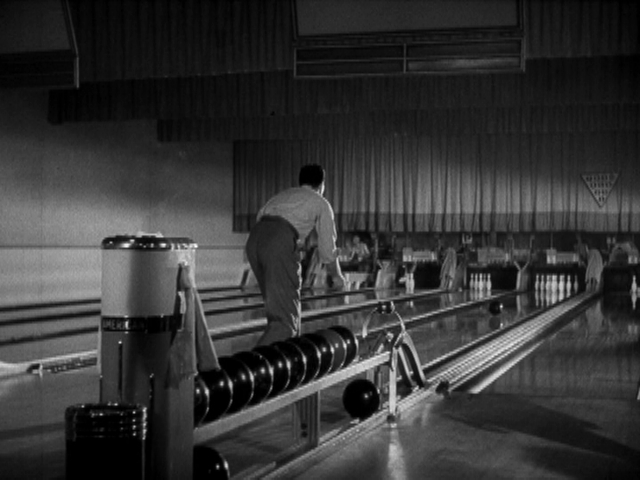
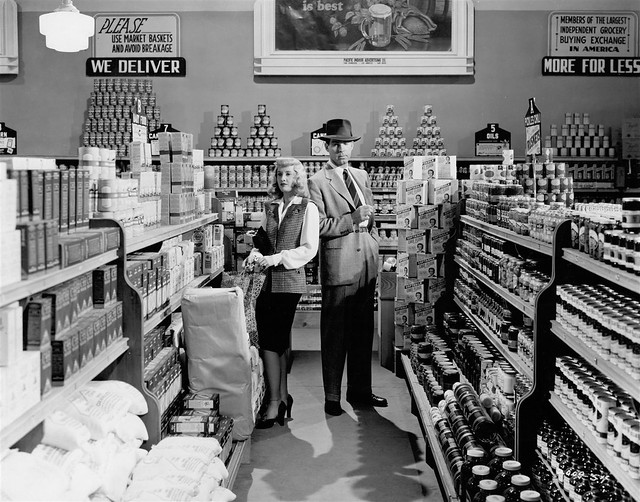
Wilder frames the dehumanizing design of industrial capitalism in 1940s Los Angeles through bowling alleys and grocery stores—massification of the moment.


The Wire similarly explores the dehumanizing design of post-industrial capitalism in contemporary Baltimore through a sterile police department. But what’s also striking in this series are the cuts from the pit and the project towers to the power elite. The show constantly reinforces how deeply divided the haves and have-nots are in the city, and the following shot is an excellent example of just that from episode 4. The following scene takes you from the pit directly into Judge Phelan’s office by way of a nice angle that shows you, as the episode epigraph notes, there’s a thin line between heaven and here.

Reflections on episode 5

01reflection 02reflection
I wrote a little about the use of mirrors last time around. We see some more in episode 5. The opening scene shows Avon Barksdale in the apartment of one of his girlfriends. We see him and his reflection divided among three mirror panes. Later in the scene he is peering through the blinds to check the street outside, and we see his reflection in another mirror. The message here is that he’s always watching himself. That circumspect caution is what kept him safe from rivals and law enforcement as he built up his business. That message is explicit in the dialogue and implicit in the mirrors.

06reflection


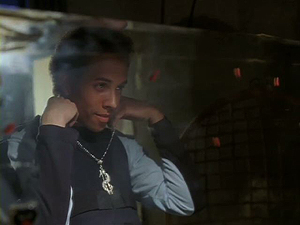
Later on there’s a shot of Brandon looking in the mirror as he tries on a necklace picked up in a robbery. In the image, he appears to be looking into darkness rather than at himself. This could be interpreted as a subtle foreshadowing.


08cemetery

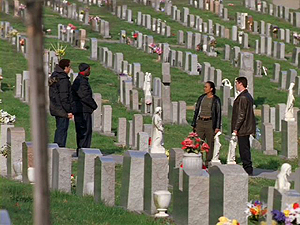
This shot shows a wide angle view of the meeting between the cops and robbers. The cemetery setting is a not-very-subtle reference to the amount of death the show deals with. Notice how the statues are all looking away from from the meet, turning a blind eye to what’s going on.


03pager


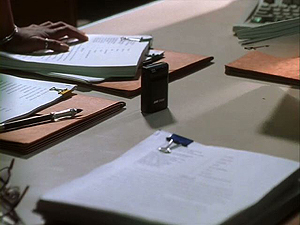
Here’s a shot of the namesake of the show – the wire. The squad has gone through all the effort to get legal permission to run a wiretap on D’Angelo’s pager, then they set it down and stare at it intently, waiting for it to buzz. It’s another bit of foreshadowing – they’re job is mostly watching and waiting.


09backlight 10backlight
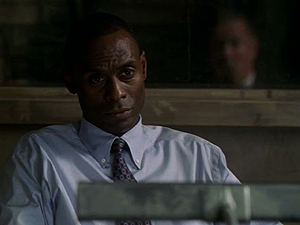
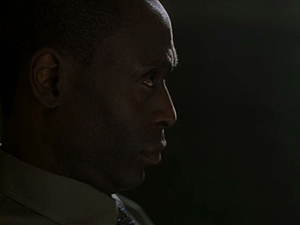
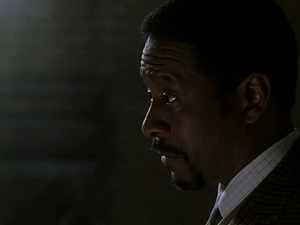
These two shots come from a discussion between Freamon and Daniels. I love the dramatic lighting, of course, but the composition also tells the story. Even though each image only shows one character, the way they’re facing indicates conversation. It’s an obvious thing, but I thought I’d highlight it anyway.

12phone 13contrast

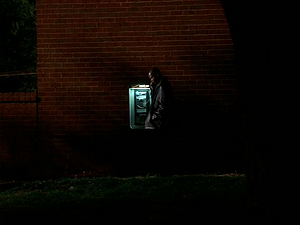
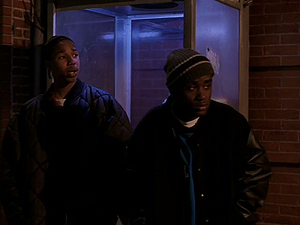
I like these two phonebox shots – that glowing, and the color contrast – showing the phones’ importance in the storyline.

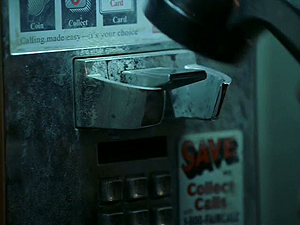
14phoneThen there’s this last one, at the closing scene. Look at all the grimy detail. There’s a message on the phone too: “it’s your choice.” The kids involved in the phone conversations know what the outcome will be, but with Poot and Wallace it’s more of an abstract thing, I think. D’Angelo knows what it is, having had some first-hand experience, and we see the weight and seriousness of it in his body language. Maybe we’d like to think they have a choice in the matter, but being in the game, as pawns no less, do they really? If D’Angelo didn’t pass along the word that Brandon had been spotted, there would have been repercussions.

The Farmer in the Dell

This episode features the scene George Veletsianos tweeted about a while ago. Peter Honig wrote a brilliant meditation on this scene a couple years ago, so there’s not much I can add. That enigmatic whistling reminds me of Ennio Morricone and some of his spaghetti western scores. Omar, the whistler, is essentially a cowboy character, although I ddin’t actually recognize that until it came up in one of the commentaries. The tune is “The Farmer in the Dell.” We know this because he says the closing line, “the cheese stands alone.” The line, and the tune, are open to some interpretation. The melody is the same as “A-Hunting We Will Go“, which fits Omar’s character well. It also fits the futility of the Game on the police end:

We’ll catch a fox and put him in a box
And then we’ll let him go

This has happened a few times already in the series, and it will again. “A-Hunting We Will Go” comes from The Beggar’s Opera, and 18th century drama which, to quote Wikipedia, “satirised politics, poverty and injustice, focusing on the theme of corruption at all levels of society.” Another fascinating parallel.