From Radio to Television to Wire 106 or, Why I teach

Iicon_4661 already blogged a bit about the Wire 106 listen along last week, and this week’s watch along, but I want to take a moment to reflect on these particular course activities. The shared object of attention for this course is The Wire (Seasons 1-4), and we spent last week focusing on listening closely, and this week exploring the visual elements of the show. Having the online students of wire106 come together in a distributed manner through the “radio” (i.e. ds106radio) and “television” (i.e. Synchtube) has worked wonders for course community. We were able to spend several hours listening and watching together, and we were linked through our course hashtag #wire106 on Twitter.

icon_66074Creating a virtual framework for fostering community is pretty much what I’ve been doing the last nine years. I’m not an expert in digital storytelling. I make no pretense to being a master teacher—there are scores of faculty at UMW alone who can claim that mantle before me. And I’m certainly not overly technical, probably one of my greatest strengths in edtech. I’m simply trying to find ways that we can build a sense of rich, dynamic course communities for a class through virtual, distributed online spaces, and then translate that experience back to others. The work the last two weeks with the radio (kudos Grant Potter) and synchronized video streaming (something Tim Owens and NoiseProfessor were exploring back in 2011) is yet another moment wherein I feel there’s so much rich potential beyond the fluorescent-lighted LMS environments (now with canned video lectures!). And what’s interesting is this distributed approach mimics seemingly trailing edge technologies like radio and TV, but adds interactive, immediate conversations through Twitter.

Screen Shot 2014-09-26 at 7.11.08 PMI am not suggesting this approach is anywhere near perfect, and I do my fair share of manic repairs on the Millennium Falcon of course spacecrafts that is ds106. That said, these targeted moments get at the idea of a unique shared experience that we can return to in targeted group video discussions to explore the themes that emerged through the conversations we had while listening and watching.

And this all returns me to the work happening with Connected Courses this week, which asks us to reflect on the question “Why do you teach?” I teach for a lot of different reasons: ego, performance, pushing myself to learn, sharing my passions, money, social capital, social justice, etc. And when it comes to online courses, it’s all those things and the idea that every time I do it’s another opportunity to push on the idea that distributed, online learning can be every bit as engaging and community forming as face-to-face. Not so much because I want to pit the two against one another, but because the privileging of one often ghettoizes the other. And, as a result, elides the conditions of labor that make a good online course possible. And then there’s the fact I am not a professor, I just play one on TV—and thankfully UMW has let my alter ego reign up and until now. But more on Dr Oblivion in another post.

Image credits: Radio designed by James Fenton from the Noun Project. Television designed by Arthur Shlain from the Noun Project
 

The 411 Photoblitz

I’ve been doing a lot of office nesting over the last six weeks or so. Why? Well, because we moved into a brand new building (which rules), and it just so happens the director of DTLT (that’s me) got an office as a result. The idea is pretty foreign to me given I have been working in a bullpen for almost nine years, but I have gotten the opportunity to arrange all my toys. So, when John Johnston’s Photoblitzer, inspired by Alan Levine’s 20-minute Photo Challenge, was assigned this week I knew I was going to photoblitz my office. I mean, how could I not given I haven’t left my office for near on six weeks?

Untitled

Image credit: Andy “Candycrush” Rush

As you will soon see, I have a lot of toys in my office, it may be the best office ever in history. But without question the best office on UMW’s campus.

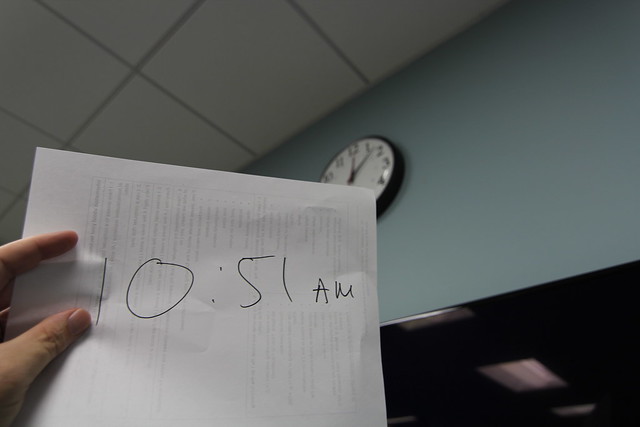
Starting time (nevermind the background):
Photoblitz fuzzy Start time

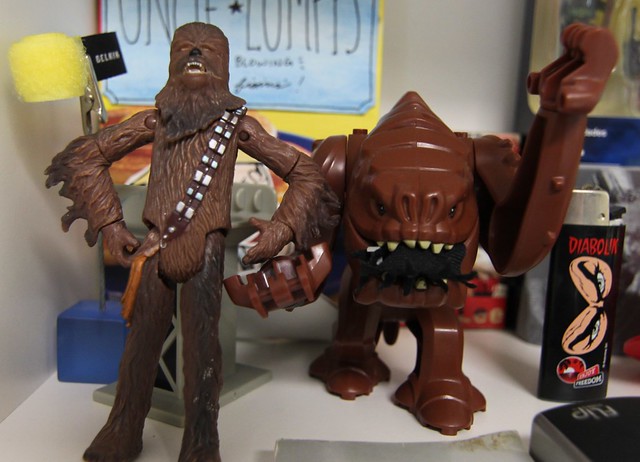
Photo Blitz Image #1: Take a picture of two contrasting things
Chewbacca vs Rancor
Photo Blitz Image #1: Take a picture of two contrasting things

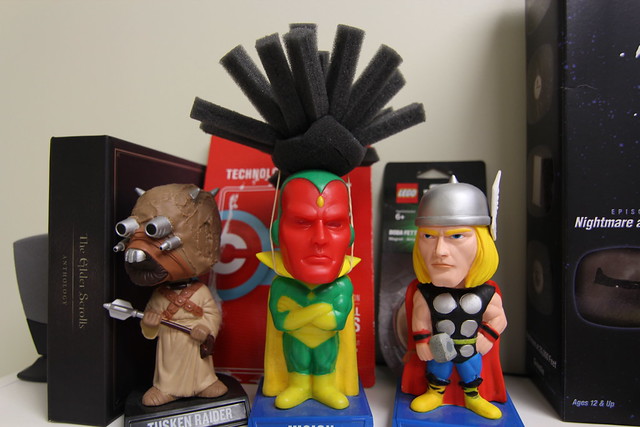
Photo Blitz Image #2: Take a picture of an interesting tree
The Vision Tree
Photo Blitz Image #2: Take a picture of an interesting tree #photblitz #ds106

Photo Blitz Image #3: Fill the frame
This is a photo of my son Miles’s three-headed Hydra I stole from him and now sits in my office.
Photo Blitz Image #3: Fill the frame #photoblitz #ds106

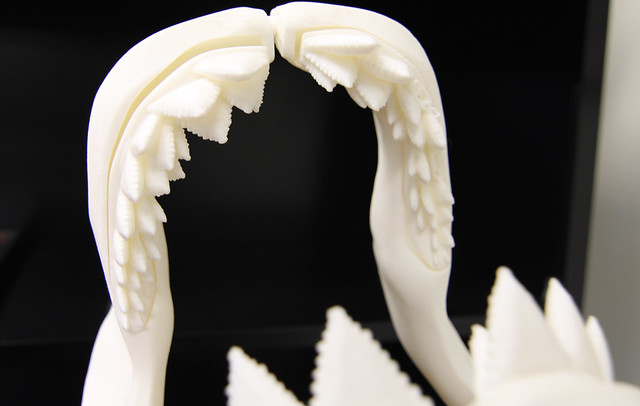
Photo Blitz Image #4: Take an image of an irregular pattern
Shark teeth follow an irregular and haunting pattern. This is a 3D print of Great White jaws.
Photo Blitz Image #4: Take an image of an irregular pattern #ds106 #photoblitz

Photo Blitz Image #5: Take an image of a word on a sign that describes how you feel
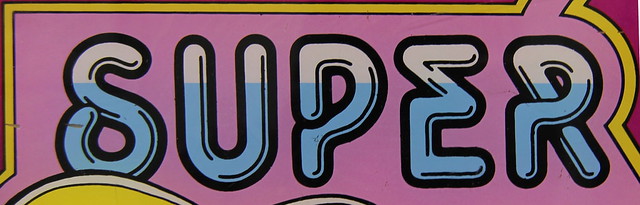
SUPER [COBRA] One of the many stand-up arcade signs on the wall of my office. Such beautiful colors and font.
Photo Blitz Image #5: Take an image of a word on a sign that describes how you feel #ds106 #photoblitz

Photo Blitz Image #6: Take a picture of something you wear
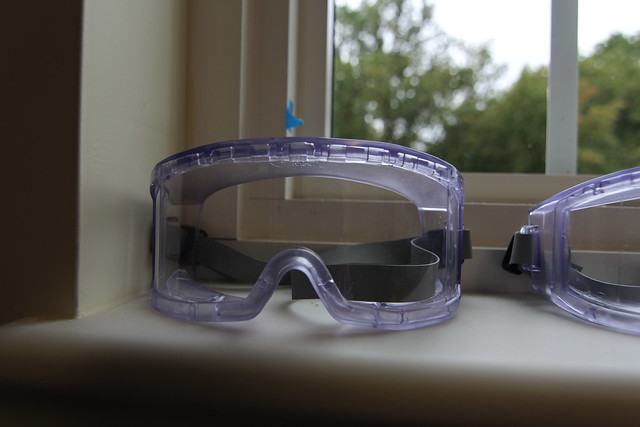
I always have my safety goggles close at hand!
Photo Blitz Image #6: Take a picture of something you wear #photoblitz #ds106

Photo Blitz Image #7: Take a picture of a pet (domesticated, wild, rabid…)
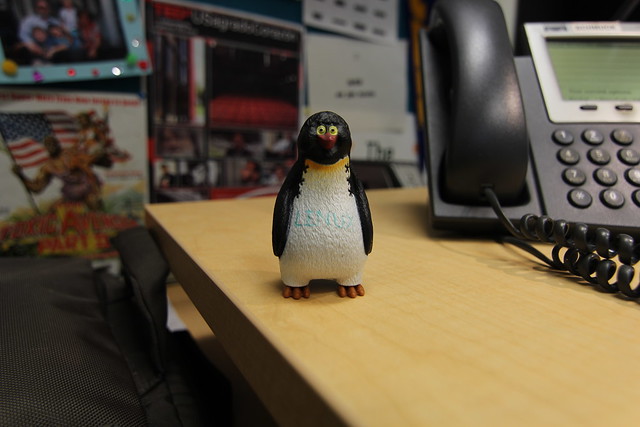
For my final image, I took a picture of Linux, the open source penguin. The pet that keeps on giving.
Photo Blitz Image #7: Take a picture of a pet (domesticated, wild, rabid...) #ds106 #photoblitz

Closing time:
Photoblitz Finish time

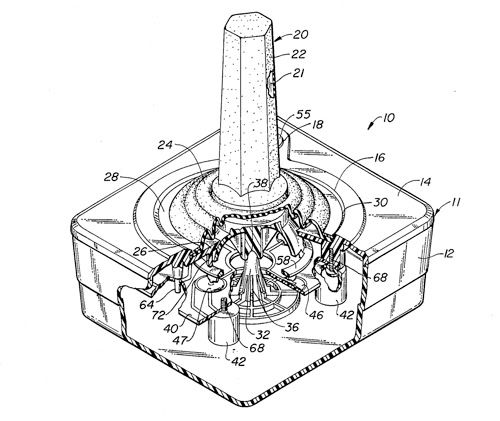
Atari 2600 Joystick

Another awesome Daily Create today (thanks Mariana!), this one was imagined by Tom Woodward and has you picking a patent image and cleaning it up to make it look cool. I couldn’t find a patent image I was in love with, so I found a schematic of the Atari 2600 joystick here, and I started playing with that. I added gridlines, made the whole canvas gray, and then played with the brightness and contrast (upping contrast and reducing brightness). It’s nothing special, but I invoked the 10 minute rule for Daily Creates and moved on. The result is below:
2600_joystick

The Daily Creates (TDC) have been very fun this semester in ds106. In fact, some of the most creative work students have done thus far has been TDCs. This got me thinking how sick it would be to have the Daily Create as a regular prompt on the media wall in UMW’s new and awesome IT Convergence Center? [The media wall is a two story screen made up of 40 HD monitors that spans the main two floors.] The idea being we have that day’s Daily Create featured on the media wall, and also show examples of what people did as they come in throughout the day. We could also encourage folks to submit new assignments and more. Effectively, we’d be inviting the entire campus into ds106 :)


Wire 106 Twitter Watch Along

Screen Shot 2014-09-23 at 9.15.30 PM

Glad to see Omar dressed up for the wire106 twitter watch-along

Last week was focused on introducing audio so we did three Wire 106 Listen Alongs via ds106radio that focused specifically on audio. This week we’re introducing visual/photography, so we wanted to switch it up and have folks watch and not listen. Do do this, Tim Owens pointed me to 6IRCNet Synchtube, which allows you to take a video uploaded somewhere online and watch it together with others. I had uploaded an episode of 6 of Season 2 without audio to another site, and I simply grabbed the raw URL of the mp4 and ran it through Synchtu.be which allowed eleven of us to watched it together in the wire106 channel for an hour with Twitter as our commentary tool—all of which is aggregated around the hashtag #wire106.

Last’s week ds106radio experiment, and this week’s Twitter Watch Along is a fun way to reinforce the course as community and remind everyone that online does not mean alienated and alone. What’s more, there are free tools out there that make the experience that much simpler and compelling.

As for watching the episode without sound, I think Carmella Mitchell and Kris Hooks got it right: it’s hard to focus on an episode of TV without the sound. You become so easily distracted. While listening to the sound last week, on the other hand, was the exact opposite experience. You are totally sucked in with audio. It reminds me of the idea Jen Ralston brought up in her interview about sound in The Wire: “sound doesn’t blink.” That was never truer when trying to watch an episode without it, you can peel away from the action without the soundtrack to keep you anchored.

Cropped Road Signs: Fallout Fan

I love today’s Daily Create, namely taking a cropped road sign and provide a different context. My idea of turning a nuclear fallout sign into a fan was quick and easy, although not nearly as creative as some of the others. Nonetheless, this post allows me to feature the awesome resources that is the Noun Project, your one-stop-shop for just about any icon you can imagine. I used the public domain fallout icon and Arthur Shlain’s fan.

I opened the fallout icon in GIMP and then imported the fan icon as a layer.  After that, I hid the fallout sign layer and erased the fan blades, but kept the base and outline.  Erasing the blades was easy, I simply chose the erase tool and used the elliptical select to make sure I didn’t erase anything else.

Screen Shot 2014-09-23 at 11.40.45 PM

When they were erased, I made the fallout icon visible again and scaled it to fit. The nice thing about the png images you get from the Noun Project is they are infinitely scalable, so you never have issues with pixelation. One I scaled the fallout shelter icon and centered that layer we were set. It was really pretty simple. But one day I;ll be able to create as awesome as the ds106 internauts. They are #4life—below is a sample of their work!

Credit: Nixmemita

Image credit: Travis Peed

Image credit: Travis Peed

Image Credit: Jessica Rheingold

Wire 106 Listen Along on ds106radio (#4life)

— John Meadows (@Physx28) September 17, 2014

Week four of Wire 106 was dedicated to listening to audio. Given that, Paul Bond suggested we load three episodes of season 2 of The Wire that we assigned this week (i.e., 3, 4, and 5) on ds106radio and have the class listen and tweet to them broadcast live. So we did, here’s how:

You need to listen to, and live tweet along with, at least one of this week’s The Wire episode’s happening this Tues/Weds/Thur at 9 PM on http://ds106rad.io/listen


And they did, Grant Potter tweeted out the stats on Thursday’s listening party when twelve people were listening to the live stream! I love the stats.

Whose on the live stream? Freddy’s in the house.

Paul Bond has already blogged his reflections about the sessions, and so did #wire106 internaut Meredith Fierro, who had the following to say:

I really enjoyed live tweeting the episode, it gave me a chance to connect with other members of my class. Since this is an online class I thought I was going to go through the class not really meeting anyone from the class. But I definitely was wrong.

This comment gets to the heart of ds106. You can have community in an online, distributed course using the open web; it just takes some time and tenacity. By week four a community on Twitter and in the blog comments is beginning to cement. What’s more, the class is starting to get into a groove of how to navigate the various class spaces on the web. It takes time and energy to do ds106 right, but I still contend the rewards are well worth the work.

And to that end, Stephen Downes was wondering what my take on literacy was in regards to Sandy Brown Jensen’s recent article on digital storytelling. I have no real stable answer, and digital storytelling always seemed like an awesome trojan horse to teach whatever I want. That said, I’ve come to a few principles about literacy more generally as a result of teaching ds106. Literacy is directly linked to the realization that knowledge and power are relational. Literacy comes as a result of reflecting and sharing openly within a network of your peers. It depends upon regular practice and participation. To gain it demands time, attention, and most importantly interest—namely your own. Finally, an excellent sign you’re becoming literate in something, anything really, is the further realization that the relationship between knowledge and power is still as potentially damning as it was when Eve bit the apple :)

Anyway, that was an aside, but I appreciate Stephen asking. But to the original point,  I think the simple act of listening closely to an episode of The Wire alongside 11 other people while tweeting your thoughts suggests this new media provides brave new possibilities for being and thinking together. I love that we are able to explore different ways of being together, because everything else seems to come from that. There’s a literacy of being digitally that’s happening really subtly in our contemporary moment more broadly, and I love that ds106 can sometimes provide a stage for how that’s unfolding in online education for a handful of students at UMW.

maddenGIFERATOR – The Wire version

bills_emanuel3_playactionpass

I’ve been seeing these maddenGIFERATOR images in my Tumblr stream, so I thought I’d try one with a quote from The Wire. Apparently “I tell your wife, you tell mine” is an illegal use of words, so I had to censor it. Whatever. It’s all in the game.

Baltimore’s Rainbow Port

I really liked Ien Harris’s “Rainbow Showcase” assignment, as well as the post he did to demonstrate how it works. That’s some awesome assignment work right there, and I love how it’s abstracted out to any movie or TV show for the assignment.

I immediately thought of season two when reading this assignment, because the port of Baltimore is so colorful. There’s a rainbow in just about every scene, between the water, the containers, the cranes, workers clothes, etc. For example, look at the very first shot of season 2:
Screen Shot 2014-09-14 at 11.51.44 PM

You can find the whole rainbow just in that shot, and the same is true of the following shot of the port. That’s a rainbow of shipping containers, so cool.

Baltimore port

But then I started thinking Lauren Brumfield already did this assignment for me, so why not just steal her screenshots because I am pushing the time limit for this. So, I am repurposing Lauren’s brilliant observations of the recurring wide shots highlighting the hulking built environment in order to highlight the colors of the rainbow :)

A very pastel green, notice how different the color palette is in season 2


Almost a bluish light in this one

Prominents Blues and Reds in this one

A red, blue, and gray palette here.

Nice red, blue, and orange here

And Lauren does my work for me, a whole rainbow of shipping containers in Season 2.